
Less overlooked.
More clearly supported.
We work to connect the damage, repair scope and evidence so the claim reflects what can be documented. Your result depends on the policy and facts, not a sales promise.
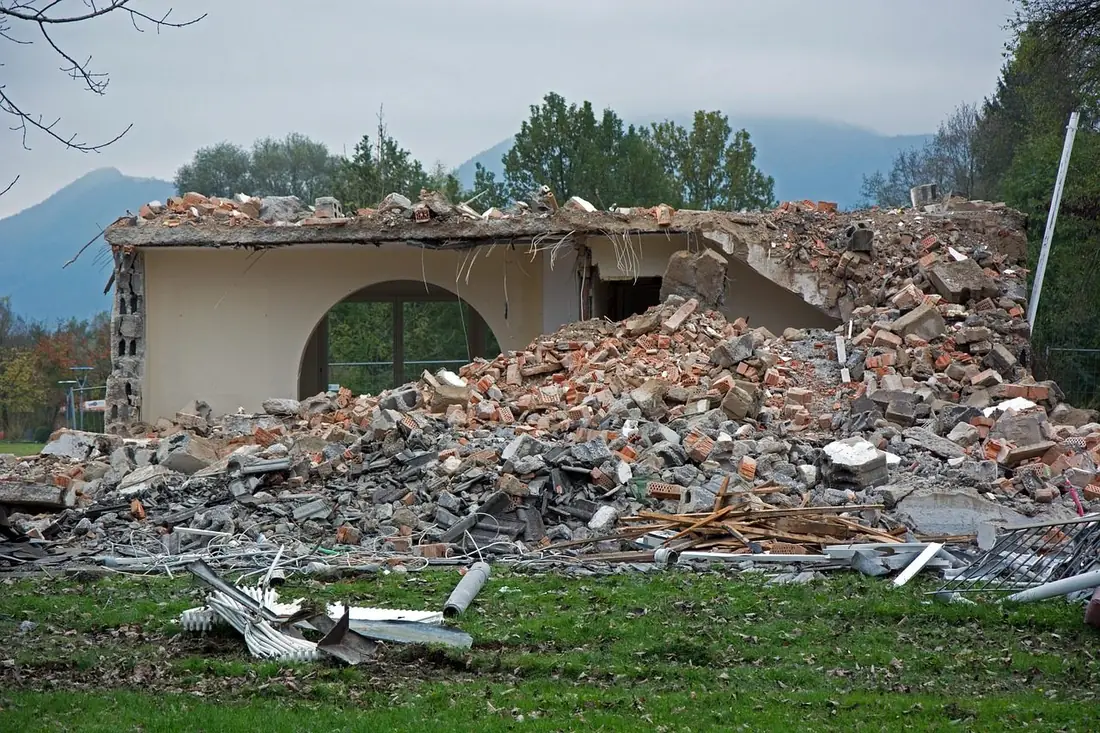
Collapse and foundation claims are among the most technical property claims. Policies define collapse narrowly, list specific causes and often require a professional opinion. Foundation movement or cracking does not answer coverage by itself: safety, cause and qualified findings come first. The claim follows.
Safety, foundation condition and qualified evaluation come first
A collapse or suspected structural failure requires appropriate safety and technical assessment. Once access is safe, the claim documentation should record what failed, what was affected and the available professional findings. The word “collapse” in everyday use does not settle how a policy applies.
What we focus on
Technical findings
Keep engineering, building official and other relevant reports.
Foundation condition
Preserve safe photographs of cracking, movement and prior maintenance or repair documentation.
Repair scope
Connect stabilization and rebuilding proposals with the assessed condition.
What collapse damage really looks like
The damage you can see on day one is rarely the whole loss. These are the areas we most often find missing from collapse claims when a file first reaches us.
Structural hazards
A partial collapse can leave nearby framing, roofing or floors unstable. Stay out of unsafe areas until a professional clears them.
Hidden decay or damage
Policies often address collapse caused by hidden decay or insect damage differently from visible deterioration.
Water-related causes
Weight of water, ice or rain, or long-term leaks, can play a role, and the policy wording on each matters.
Resulting damage
A collapse can damage contents, finishes, systems and adjoining structures.
Code and engineering requirements
Repairs may require engineering, permits and code upgrades beyond the original construction.
Cause and timing
Whether the event is sudden, and what caused it, are usually the central questions.
Where insurer estimates commonly fall short
Most first estimates are prepared quickly and from limited information. Gaps are usually about scope, not arithmetic: what was left out, not how it was priced. These are general patterns, not a statement about any particular insurer or claim. In Florida, a preliminary or partial estimate must state that it may be revised as the insurer continues to evaluate the claim (s. 627.70131(6)(a)), so treat a first estimate as a starting point.
- Denying the loss without addressing the policy’s specific collapse causes
- Omitting engineering, shoring and temporary support costs
- Leaving out resulting damage to contents and adjoining areas
- Missing code-required items and permit costs
- Scoping a cosmetic repair where structural work is reasonably needed
The ceiling that came down
Imagine a section of ceiling that suddenly falls after a heavy storm. The debris is swept up that evening. Later, questions about the cause center on the framing and the roof above. Keeping the debris, photographing the framing and getting an engineer’s opinion before cleanup would have preserved the key evidence.
Your documentation checklist
You do not need a perfect file to call us. Start with what you have, keep adding to it and never throw damaged material away before it is photographed.
What to gather and keep
- Photos and video from a safe distance, before anything is moved
- Any engineer’s or contractor’s written findings
- Records of shoring, temporary supports and emergency work
- Maintenance and repair records for the affected area
- Weather records if rain, ice or snow load may be involved
- A list of damaged contents
- Your policy’s collapse provisions and definitions
A typical collapse claim timeline
- 1Day of the lossSafety and protection
Make the property safe, photograph the damage and make reasonable emergency repairs to prevent further damage. Keep every receipt.
- 2Before you call the insurerFree consultation
Call a licensed public adjuster first. We help you report the claim correctly and prepare for the recorded statement and inspection.
- 3PromptlyGive notice
Report the claim as soon as you reasonably can. In Florida, s. 627.70132 bars a new or reopened claim unless notice is given within 1 year after the date of loss, and a supplemental claim within 18 months.
- 4Within 7 daysAcknowledgment
Florida insurers generally must review and acknowledge a claim communication within 7 calendar days (s. 627.70131(1)(a)).
- 5Within 30 days of proof of lossInvestigation and inspection
The insurer generally must begin investigating within 7 days after receiving proof-of-loss statements and conduct any physical inspection within 30 days (s. 627.70131(3)). A copy of any detailed estimate must be sent within 7 days after it is generated.
- 6Within 60 days of noticePay or deny
The insurer generally must pay or deny the claim, or a portion of it, within 60 days after notice, with a written explanation, unless factors beyond its control prevent it (s. 627.70131(7)(a)).
Florida timelines apply to residential property claims and certain smaller commercial claims, and include exceptions and tolling (for example during mediation). In the other states where we are licensed, deadlines come from your policy and that state’s law and can be very different; we check them for your claim. General education, not legal advice.
Mistakes to avoid
These are the early missteps we see most often. Each one is easier to prevent than to fix, which is why a free consultation before you talk to your insurer matters.
- Entering or cleaning up unsafe areas before they are evaluated
- Speculating about the cause in a recorded statement
- Removing debris that shows how the collapse happened
- Accepting a denial without comparing it to the policy’s collapse wording
- Starting permanent repairs before engineering and documentation
How American Financial Claims helps
A public adjuster works for the policyholder, not the insurance company. Here is how a claim typically moves with us, from the first call.
- Free consultation. Call (239) 444-8101 or request a review. We listen, look at what you have and tell you honestly whether we see a path, including when we do not.
- Report it correctly. You still give your insurer prompt notice. We help you do it accurately and prepare you for the recorded statement and the insurer’s inspection.
- Inspect and document. If you retain us, we inspect the property, photograph and measure the damage and gather the records in the checklist above.
- Build the scope. We prepare a detailed estimate of what the repair actually requires and compare it line by line with the insurer’s.
- Present and follow through. We present the claim, answer requests, track deadlines and keep you updated until the claim is resolved.
We serve policyholders in the 15 states where we hold public adjuster licenses. See our licensing information. No outcome is guaranteed; every claim depends on the policy and the facts.
You can read documented examples of our work on our results page. Past results do not guarantee or predict a similar outcome.
Related reading
A common question
Can a public adjuster certify that a structure is safe?
No. Structural safety must be assessed by qualified professionals and the relevant authorities.
Related claim help
Protect the property. Document the disruption.
Organized claim representation for business owners, property owners and associations.
Explore this page →Make the repair scope understandable.
A useful estimate explains the work, quantities and supporting evidence behind the claim.
Explore this page →Know what is in your claim file.
Bring the policy, correspondence and estimates together for a focused review.
Explore this page →Choose the next step for the loss
If water or a failed pipe contributed to the structural condition, start with the record that matches the loss. We can review the policy and available documentation before you decide what to do next.
Collapse claim FAQ
What counts as a collapse under a property policy?
Many policies define collapse narrowly, often as an abrupt falling down or caving in so that the building or part of it cannot be occupied for its intended purpose. Read your policy’s exact definition.
Are cracking, sagging or bulging considered collapse?
Often not by themselves. Many policies say cracking, bulging, sagging, bending, leaning, settling, shrinkage or expansion alone is not collapse. The facts and wording decide.
What causes of collapse are commonly covered?
Policies that include collapse coverage typically list causes such as hidden decay, hidden insect or vermin damage, weight of ice, snow or rain on a roof, and certain defective construction methods when collapse happens during construction. Check which causes your policy lists.
What should I do right away?
Get everyone out and keep them out until the structure is safe. Contact emergency services if needed, notify your carrier, and document from a safe distance. Engineers may be needed to assess the structure.
Why do collapse claims often need an engineer?
Because the cause of the collapse decides coverage. An engineering report can identify what failed and why, which is often central to the claim.
Can you promise a settlement amount or a timeline?
No. Every outcome depends on the policy, the facts of the loss, the documentation and the carrier’s position. We explain what we see and what is still open, without promising an amount or a date. The review is free.
General information, not legal advice. Policies and state laws differ. Ask about your specific claim.