
Less overlooked.
More clearly supported.
We work to connect the damage, repair scope and evidence so the claim reflects what can be documented. Your result depends on the policy and facts, not a sales promise.
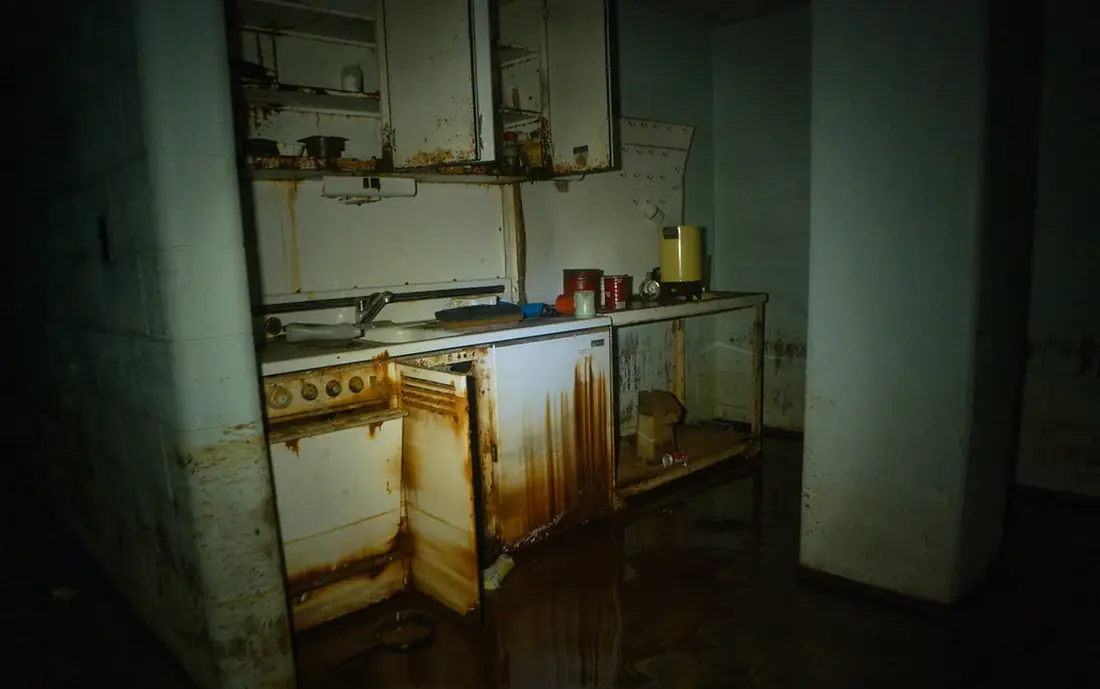
Water damage moves faster than any other loss. Within hours it is under the flooring, inside the walls and wicking up drywall. The claim depends on showing where the water came from, how far it traveled and what it takes to put the home back.
Hidden effects deserve a documented inspection
Visible staining may not describe all affected materials. A water-loss file should connect the reported source with room observations, moisture documentation and repair proposals. Keep emergency drying records and invoices so the sequence of work is clear for the claim review.
What we focus on
Source information
Save the plumber’s or technician’s explanation of the problem and repairs.
Affected materials
Document rooms, cabinets, flooring and adjoining areas identified during inspection.
Drying records
Preserve moisture logs, equipment records and invoices from the mitigation company.
What water damage really looks like
The damage you can see on day one is rarely the whole loss. These are the areas we most often find missing from water claims when a file first reaches us.
Wicking in drywall
Drywall pulls water upward well above the visible line. Cutting too low leaves wet material behind.
Subfloor and underlayment
Water under laminate, vinyl plank and hardwood can soak the subfloor, which may need drying or replacement.
Cabinets and toe kicks
Base cabinets, toe kicks and the wall behind them trap moisture and often swell or delaminate days later.
Adjoining rooms
Water travels under walls into closets, hallways and neighboring rooms that were never part of the first inspection.
Mold risk
Wet materials that are not dried quickly can support mold growth. Many policies limit mold coverage, so the water event behind it must be documented.
HVAC and ductwork
Returns and ducts near the source can take on water and odors that spread through the home.
Where insurer estimates commonly fall short
Most first estimates are prepared quickly and from limited information. Gaps are usually about scope, not arithmetic: what was left out, not how it was priced. These are general patterns, not a statement about any particular insurer or claim. In Florida, a preliminary or partial estimate must state that it may be revised as the insurer continues to evaluate the claim (s. 627.70131(6)(a)), so treat a first estimate as a starting point.
- Scoping only the room where the leak started
- Pricing drywall to a low flood cut when moisture readings show wicking higher
- Leaving out cabinet removal and reset, or continuous flooring that runs into other rooms
- Omitting insulation, baseboards, paint for full walls and contents manipulation
- Treating a sudden leak as long-term seepage without explaining the basis
The baseboards on the curb
Picture a condo owner who finds a leak under the kitchen sink and throws out the swollen baseboards and toe kicks the same day. When the estimate later covers only the area around the sink, there is little to show how far the water spread. A few photos and moisture readings before cleanup would have told that story clearly.
Your documentation checklist
You do not need a perfect file to call us. Start with what you have, keep adding to it and never throw damaged material away before it is photographed.
What to gather and keep
- Photos and video of every affected room before demolition, taken safely
- The plumber’s or technician’s written findings on the source, with the date
- The failed part (supply line, valve, fitting), bagged and labeled if possible
- Moisture maps, drying logs and invoices from the mitigation company
- Photos of wall cavities and subfloors once opened
- A list of damaged contents, with photos before disposal
- Your policy’s water and mold provisions and endorsements
A typical water claim timeline
- 1Day of the lossSafety and protection
Make the property safe, photograph the damage and make reasonable emergency repairs to prevent further damage. Keep every receipt.
- 2Before you call the insurerFree consultation
Call a licensed public adjuster first. We help you report the claim correctly and prepare for the recorded statement and inspection.
- 3PromptlyGive notice
Report the claim as soon as you reasonably can. In Florida, s. 627.70132 bars a new or reopened claim unless notice is given within 1 year after the date of loss, and a supplemental claim within 18 months.
- 4Within 7 daysAcknowledgment
Florida insurers generally must review and acknowledge a claim communication within 7 calendar days (s. 627.70131(1)(a)).
- 5Within 30 days of proof of lossInvestigation and inspection
The insurer generally must begin investigating within 7 days after receiving proof-of-loss statements and conduct any physical inspection within 30 days (s. 627.70131(3)). A copy of any detailed estimate must be sent within 7 days after it is generated.
- 6Within 60 days of noticePay or deny
The insurer generally must pay or deny the claim, or a portion of it, within 60 days after notice, with a written explanation, unless factors beyond its control prevent it (s. 627.70131(7)(a)).
Florida timelines apply to residential property claims and certain smaller commercial claims, and include exceptions and tolling (for example during mediation). In the other states where we are licensed, deadlines come from your policy and that state’s law and can be very different; we check them for your claim. General education, not legal advice.
Mistakes to avoid
These are the early missteps we see most often. Each one is easier to prevent than to fix, which is why a free consultation before you talk to your insurer matters.
- Tearing out and discarding materials before anyone documents them
- Describing the leak as “it’s been dripping a while” in a recorded statement without knowing the facts
- Ignoring rooms that “only smell a little”
- Accepting a scope that stops at the first room
- Waiting so long that secondary damage and mold raise new questions
How American Financial Claims helps
A public adjuster works for the policyholder, not the insurance company. Here is how a claim typically moves with us, from the first call.
- Free consultation. Call (239) 444-8101 or request a review. We listen, look at what you have and tell you honestly whether we see a path, including when we do not.
- Report it correctly. You still give your insurer prompt notice. We help you do it accurately and prepare you for the recorded statement and the insurer’s inspection.
- Inspect and document. If you retain us, we inspect the property, photograph and measure the damage and gather the records in the checklist above.
- Build the scope. We prepare a detailed estimate of what the repair actually requires and compare it line by line with the insurer’s.
- Present and follow through. We present the claim, answer requests, track deadlines and keep you updated until the claim is resolved.
We serve policyholders in the 15 states where we hold public adjuster licenses. See our licensing information. No outcome is guaranteed; every claim depends on the policy and the facts.
Real results on similar claims, shared with our clients’ permission, are shown further down this page. Past results do not guarantee or predict a similar outcome.
Related reading
Related claim help
Plumbing damage claims
Keep the pipe or fixture failure and the resulting property damage clearly documented.
Explore this page →Mold-related property claims
Review the moisture history, assessment records and proposed remediation together.
Explore this page →Help for the place you call home.
Claim support for homeowners and condo owners dealing with property damage.
Explore this page →Water claim help in Miami
For a plumbing or water loss in Miami, keep the source report, mitigation records and repair scope together. Review a matching case, then choose the next step that fits your file.
Questions about this claim
How does the source of water affect a claim?
The source, timing, affected materials, policy terms and any applicable exclusions all matter. Keep records that distinguish a sudden plumbing event, roof entry, seepage or other source so the particular loss can be reviewed accurately.
Should I begin drying before the inspection?
Take photos first when safe, then take reasonable steps to prevent additional damage and keep the mitigation company’s readings, work notes and invoices. Do not wait for an inspection if delay could worsen the property.
What if the water damage keeps spreading after the first visit?
Photograph each change, note dates and notify the relevant parties promptly. Moisture can move through ceilings, walls and flooring, so a later condition should be documented and evaluated rather than treated as unrelated automatically.
How should I document tear-out and damaged contents?
Photograph items in place before disposal when safe, keep an inventory and preserve samples or removed materials when practical. Save contents lists, drying logs, invoices and repair scopes for the claim file.
Why call American Financial Claims first on a water loss?
Early decisions about reporting, mitigation, tear-out and inspections can affect the evidence. Call American Financial Claims at (239) 444-8101 for a free consultation before speaking with the insurer when possible; coverage and results depend on the policy and facts.
General information, not legal advice. Policies and state laws differ. Ask about your specific claim.
Real results on similar claims
Recoveries clients authorized us to share
Recoveries clients authorized us to share. Every insurance claim is different, and prior results do not guarantee a similar outcome. See all results →