Water claims
Seven water damage claim mistakes that quietly shrink your claim
Water moves fast and hides well. These common missteps make a water loss harder to document and can leave part of the repair out of the claim. Here is how to avoid each one.

By Armando Ferrer, Licensed Public Adjuster
American Financial Claims · Florida firm license G288962
Published · Updated 6 min read
In this article (7 sections)
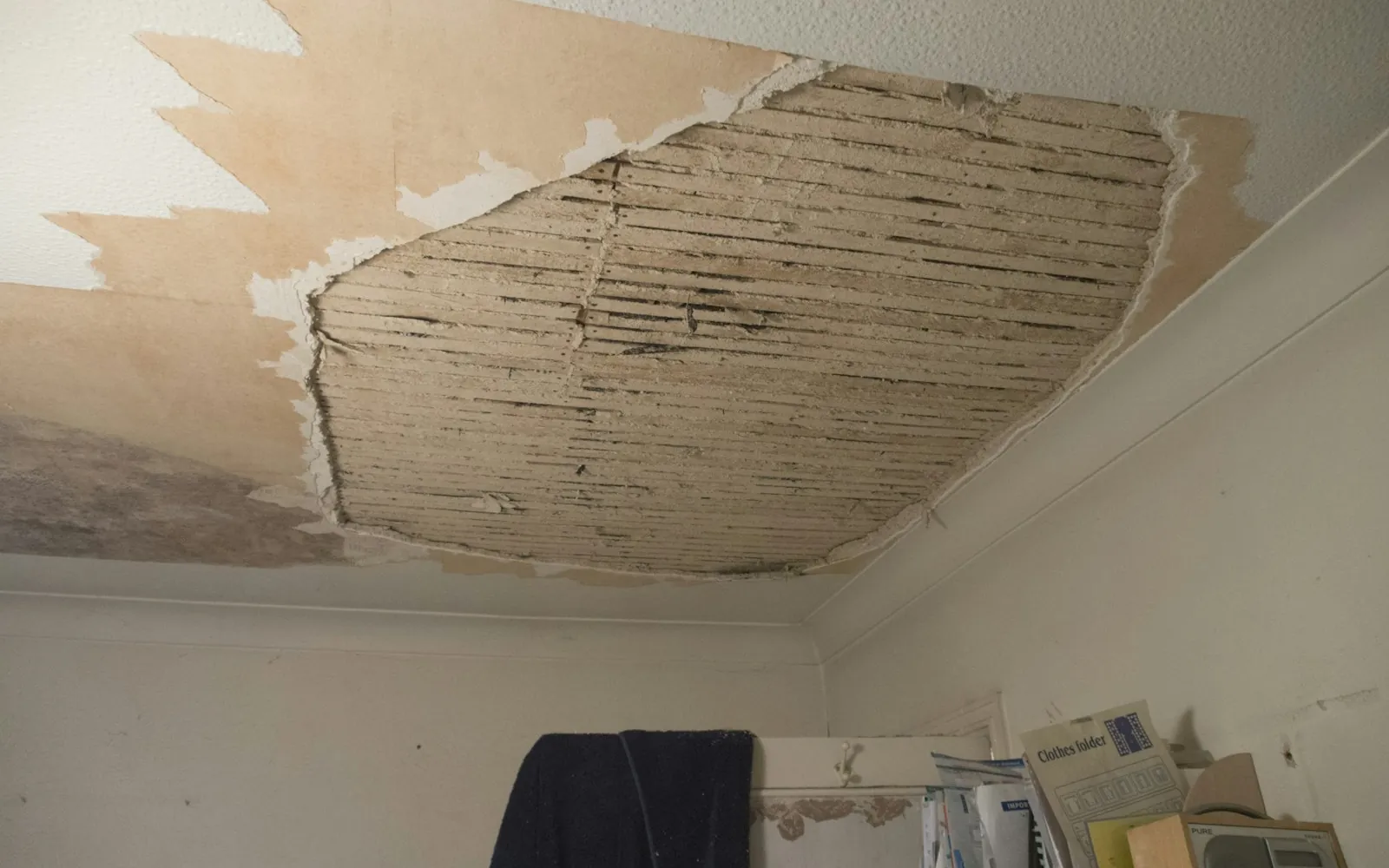
Water damage is one of the most common property claims, and one of the easiest to get wrong. It starts with a burst supply line, an overflowing appliance, a roof leak or a failed water heater. Within hours, water is under the flooring, inside wall cavities and wicking up drywall.
Most homeowners respond the same way: clean up fast and get back to normal. That instinct is healthy for your family and costly for your claim, because the evidence of how far the water traveled is exactly what gets cleaned up first.
Below are seven mistakes we see often, and what to do instead. This is general education, not legal advice. Coverage for water damage depends heavily on your policy language.
The mistake behind the mistakes: going it alone in the first days
Almost every mistake below happens in the first 48 hours, before the homeowner has talked to anyone on their side. Start mitigation right away and report the claim promptly, but call a licensed public adjuster first for a free consultation. We can tell you what to photograph before the drying crew starts, what to keep, how to describe the source when you report the claim and what to expect if the insurer asks for a recorded statement or sends an adjuster to inspect.
Mistakes 1 and 2: demolishing before documenting, and not finding the source
Mistake 1: tearing out materials before anyone records them
Pulling up wet carpet, cutting out drywall and tossing baseboards is often necessary. But once they are gone, so is the proof of how much was affected. Before demolition, when it is safe, photograph every affected room wide and close, and note measurements. If a mitigation company is coming, ask them to document moisture readings before they remove anything.
Mistake 2: not identifying and recording the source
Many water claims turn on cause. A sudden pipe burst is treated very differently from a slow leak over months, and flood water is usually excluded from standard homeowners policies. Have a plumber or roofer identify the source, and get their findings in writing with the date. Keep the failed part if you can.
Keep the broken part
A cracked supply line, a failed valve or a ruptured water heater tank is physical evidence of a sudden event. Bag it, label it with the date and keep it.
Mistake 3: ignoring hidden moisture
Water travels sideways under flooring, down inside walls and into cabinets, subfloors and ductwork. A room that “only smells a little” may have wet materials behind the surface.
Places water often hides
- Under laminate, vinyl plank and hardwood floors
- Inside lower cabinets and toe kicks
- Behind baseboards and inside wall cavities
- In adjoining rooms, closets and hallways
- In ceilings below a second-floor leak
- Inside HVAC returns and ductwork near the source
Ask the drying company for their moisture maps and daily logs. Those records show where water went and how long drying took.
Hidden moisture also matters for mold. Many policies limit or exclude mold unless it results from a covered water event, and some cap mold remediation at a set dollar amount. Read the mold provisions in your policy and endorsements, and document the water event that caused any mold growth. Our page on mold-related property claims explains more.
Mistakes 4 and 5: throwing away evidence and losing receipts
Mistake 4: discarding damaged materials and contents
Photograph damaged contents before they go to the curb, and keep a list with approximate ages and brands. For flooring, cabinets and other materials, keep small samples if it is practical. They can matter when the question becomes whether replacements can match.
Mistake 5: losing track of mitigation costs
Emergency water extraction, drying equipment, temporary repairs and even extra utility costs from running fans can add up. Keep every invoice and receipt. Ask the mitigation company for an itemized invoice, not just a total.
Mistake 6: waiting too long
Water damage gets worse with time. Materials that could have been dried may need replacement, and mold can develop. Delay can also raise questions about whether damage came from the original event or from the time that passed afterward.
Report the claim promptly, as your policy requires, and start mitigation right away. In Florida, section 627.70132 of the Florida Statutes bars a new property claim unless notice is given within one year after the date of loss. Other states and policies set their own limits, and your policy may require notice sooner. Read the conditions section.
“A clear moisture story is easier to present than a memory of a wet weekend.”
Mistake 7: accepting an incomplete repair scope
Water estimates are often short on the details that make the repair possible: removing and resetting cabinets, replacing continuous flooring that runs into undamaged rooms, drywall above the flood cut, insulation, paint for the whole wall and baseboards.
- Get the insurer’s full itemized estimate.
- Get a detailed contractor estimate, room by room.
- Compare rooms, quantities and repair operations line by line.
- List differences with supporting photos and moisture records.
- Send questions in writing and keep copies.
Our guides on reviewing an insurance estimate and comparing repair estimates show how.
Getting help with a water damage claim
Water claims range from simple to very complex, especially when cause is disputed, mold is involved, or the damage spans several rooms or units. A licensed public adjuster works for the policyholder and can document the loss, prepare a detailed estimate and present the claim.
Learn more on our water damage, plumbing damage and mold-related claims pages. If your claim has already been denied, see what to do after a denial.
For a companion documentation guide, read How to document a property insurance claim so the file can stand up from The Insurance Game chapter guides.
Frequently asked questions
Is water damage covered by homeowners insurance?
It depends on the cause and your policy. Many policies cover sudden and accidental water damage, such as a burst pipe, while excluding flood, long-term seepage or wear and tear. Read your policy’s water provisions and endorsements, which can add limits.
Should I remove wet drywall and flooring before the adjuster comes?
Reasonable steps to prevent further damage are usually expected, and wet materials often need to come out quickly. Photograph and measure first, keep samples where practical, and get moisture readings from the mitigation company.
What if the insurer says the leak was long-term?
Ask what evidence the conclusion is based on. A plumber’s written findings, the failed part, dated photos and mitigation records can help show when and how the water escaped.
Can a public adjuster help with a water damage claim?
Yes. A public adjuster can document the extent of water damage, prepare a detailed estimate and present the claim on your behalf. The review at American Financial Claims is free.
Free claim review
Want a second set of eyes on your claim?
Send us the letter, the estimate or just a description of what happened. A licensed public adjuster will review it at no cost and tell you plainly what we see, including when we don’t see a path. No recovery, no fee.
Prefer to read first? Get the free digital edition of Armando’s book, The Insurance Game: And How To Win It. Schedule a free consult Public adjuster services Read chapter guides.

Armando Ferrer
Licensed Public Adjuster · American Financial Claims · Florida firm license G288962
Armando leads public adjusting work at American Financial Claims, a public adjusting firm based in Brickell, Miami. Armando Ferrer is individually licensed in 15 states; the firm entity license is Florida only (G288962). He is the author of The Insurance Game: And How To Win It. Consultations in English and Spanish. More about Armando.
Educational information only, not legal advice. Scenarios in this article are general illustrations, not real cases or clients. Coverage, deadlines and outcomes depend on your policy, your state and your facts, and no result is guaranteed. Statute references are to the Florida Statutes as published by the Florida Legislature; other states’ rules differ. American Financial Claims is a public adjusting firm, not a law firm.