Stay safe
Stay away from downed power lines and standing water, which can hide debris or be electrified. Run generators outdoors only, well away from doors and windows, to avoid carbon monoxide. Wear gloves and sturdy shoes during cleanup.
Your property. Your claim. Your advocate.
Speak with a public adjuster: (239) 444-8101
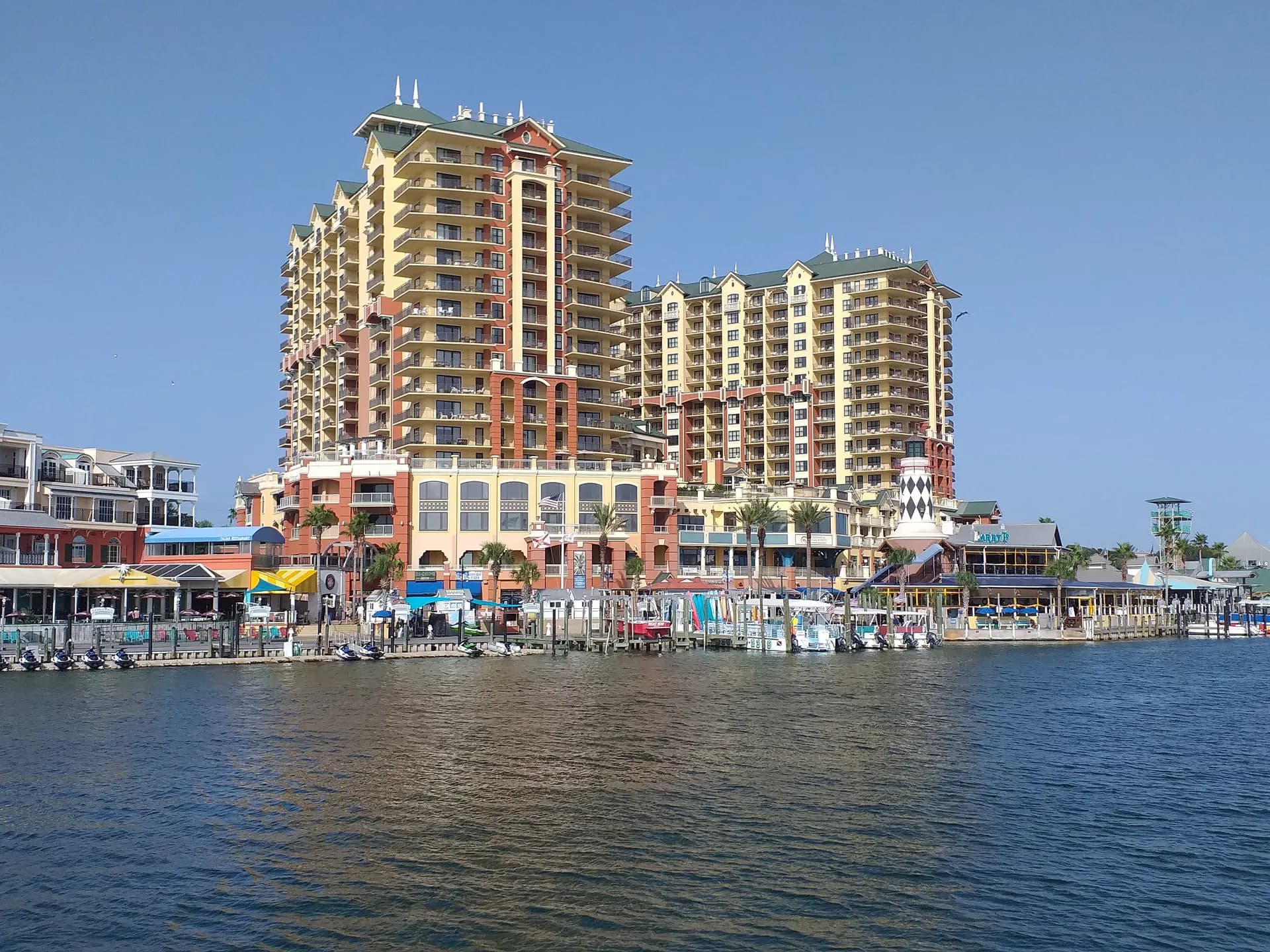
Destin · Fort Walton Beach · Okaloosa Island · Okaloosa County
Destin and Fort Walton Beach sit between the Gulf, Choctawhatchee Bay and Santa Rosa Sound, so storm damage here often mixes wind, wind-driven rain and rising water. If Isaias damaged your property in Okaloosa County, this page explains what to do first and how to build a claim file the insurer can't easily dismiss.
Many properties here are condos and vacation rentals, which means two or more policies, an association, and sometimes lost rental income. Getting the paperwork organized early saves time later.
We respond to requests you start, Monday–Saturday, 8 a.m.–8 p.m. ET.
Right after the storm
Stay away from downed power lines and standing water, which can hide debris or be electrified. Run generators outdoors only, well away from doors and windows, to avoid carbon monoxide. Wear gloves and sturdy shoes during cleanup.
Return only when officials say your area is safe, and follow curfews, boil-water notices and road closures.
Your policy generally expects you to take reasonable steps to protect the property: tarp roof openings, board broken windows, remove standing water and start drying. Keep receipts and photograph the work. Hold off on permanent repairs until the damage is documented, unless waiting is unsafe or would make the damage worse.
Photograph and video damaged flooring, drywall, furniture and belongings before they go to the curb. When practical, keep a small sample, such as a piece of carpet or flooring. If something must go right away for health reasons, photograph it first and write it down.
Bridges such as the Brooks Bridge and roads on Okaloosa Island and Holiday Isle may stay restricted after the storm. Wait for official reopening before going back to check on a unit.
Before cleaners or maintenance crews enter, photograph every room, balcony and common area. Keep the guest-cancellation and refund records for any affected dates.
If you own a condo unit, tell the association and the management company what you see in your unit, in writing, and ask for the master-policy claim number.
Read the "Duties after loss" section of your policy, because the exact wording controls. In general, Florida law expects notice of a new or reopened property claim within one year of the date of loss, and a supplemental claim within 18 months. Don't wait: prompt notice is a policy duty.
Documentation
Start outside: all four sides of the building, the roof as far as you can see safely from the ground, fences, screen enclosures and outbuildings. Then go room by room, wide shots first, then close-ups.
Missing or lifted shingles, tiles or metal panels, damaged soffits, fascia and gutters, broken windows and doors, and any debris impacts.
Photograph the highest water line on walls, cabinets, fences and the garage, and the stains on ceilings and walls. Note whether water came from above (roof, windows) or from rising water outside.
List damaged belongings room by room: what it is, brand or model if known, about how old, and what it cost or would cost to replace. Receipts, bank statements and old photos help.
Keep receipts for tarps, fans, dehumidifiers, board-up, tree and debris removal. If you can't live at home, keep receipts for hotel, meals above your normal costs, and mileage. Additional living expense (loss of use) coverage depends on your policy.
Coverage basics
Homeowners, condo (HO-6) and commercial property policies generally cover wind damage, and rain that gets in through an opening the wind created, subject to your deductible, limits and exclusions.
Most homeowners and condo policies exclude flood and storm surge. That water is generally covered only by a separate flood policy, such as an NFIP policy or a private flood policy.
Many properties have both wind and water damage. If you have both policies, report the loss to both insurers, and document where water came in and how high it rose. That evidence is how the damage gets assigned to the right policy.
Flood insurance information from FEMA's FloodSmart ↗
Whether your hurricane deductible or your regular (all other perils) deductible applies depends on how Isaias was classified while it affected Florida, the timing of the hurricane watches and warnings, and your policy wording. Florida law defines when the hurricane deductible applies.
Don't assume the damage is below your deductible just because it looks small at first. Hidden roof damage, interior water and contents can add up.
Estimate your deductible with our hurricane deductible calculator →
Before you sign
Before signing with a contractor, roofer, water-mitigation company or public adjuster, read the scope, the price, the payment terms and how to cancel. Take a copy. Don't sign anything blank or rushed.
An assignment of benefits (AOB) hands your insurance claim rights to someone else. For residential and commercial property policies issued on or after January 1, 2023, Florida law generally doesn't allow assigning post-loss benefits. If a document mentions assigning or directing your insurance payments, ask what it means before signing.
Be cautious of anyone who offers to waive or pay your deductible or offers gifts for filing a claim. Florida law prohibits contractors from making those offers. You can check a contractor's license at MyFloridaLicense.com and a public adjuster's license with the Florida Department of Financial Services.
Public adjuster fees must be in a written contract. In Florida, for claims from a declared state of emergency, public adjuster fees are generally capped at 10% of claim payments during the first year after the declaration.
This is general information, not legal advice. Your policy and the facts of your loss control.
Okaloosa County
Harbor, bayfront and sound-side addresses can see water from a different direction than the Gulf front. Note where water entered and how high it reached, because flood and surge are usually covered by a separate flood policy.
In Destin and on Okaloosa Island, unit owners often face the master-policy deductible, a possible special assessment, and their own HO-6 claim at the same time. Your HO-6 policy may include loss-assessment coverage. Check the declarations page.
Gulf-front properties seaward of the state Coastal Construction Control Line generally need Florida DEP permits for many repairs, which can affect repair timelines and costs.
Shops, restaurants and offices may have business-income and spoilage coverage. Keep sales records, payroll and the dates you were closed.
For closures, re-entry, shelters, debris pickup and permits, rely on your county and city.
Free claim review
Start with your contact details and a short description. Photos are optional. Asking for a review doesn't hire the firm and costs nothing.
Prefer to talk? Call or text (239) 444-8101
We respond to requests you start, Monday–Saturday, 8 a.m.–8 p.m. ET.
Armando Ferrer is individually licensed as a public adjuster in 15 states. American Financial Claims holds Florida firm license G288962. A public adjuster represents the policyholder, not the insurance company. Every claim depends on the policy and the facts, and no outcome is guaranteed.
Questions
Lost rental income is covered only if your policy includes it, often called fair rental value, loss of rents or a rental endorsement, and usually only when the loss comes from covered damage. Keep the booking calendar and cancellation records, and we can review what your forms say.
It depends on how the water got in. Rain that came through an opening the wind created is generally handled under the property policy, while rising water from surge or flooding is generally a flood-policy claim. Photos of where the water entered and how high it rose help sort this out.
You should give your insurer prompt notice of the loss, as your policy requires. You can also talk with us before or after you report it, to organize photos, dates and policy questions. A free review doesn't obligate you to hire anyone.
No. The initial conversation and review are free. If American Financial Claims represents your claim, the agreement and fees are explained in writing before you sign.
Not necessarily. You can still document damage you find later, and estimates or payments can be reviewed. Keep everything the insurer sends you, including the estimate and any letters.
General information for property owners after Isaias. Not legal advice, and not a promise of coverage or payment. Your policy and the facts of your loss control. American Financial Claims is not affiliated with any insurance company or government agency.