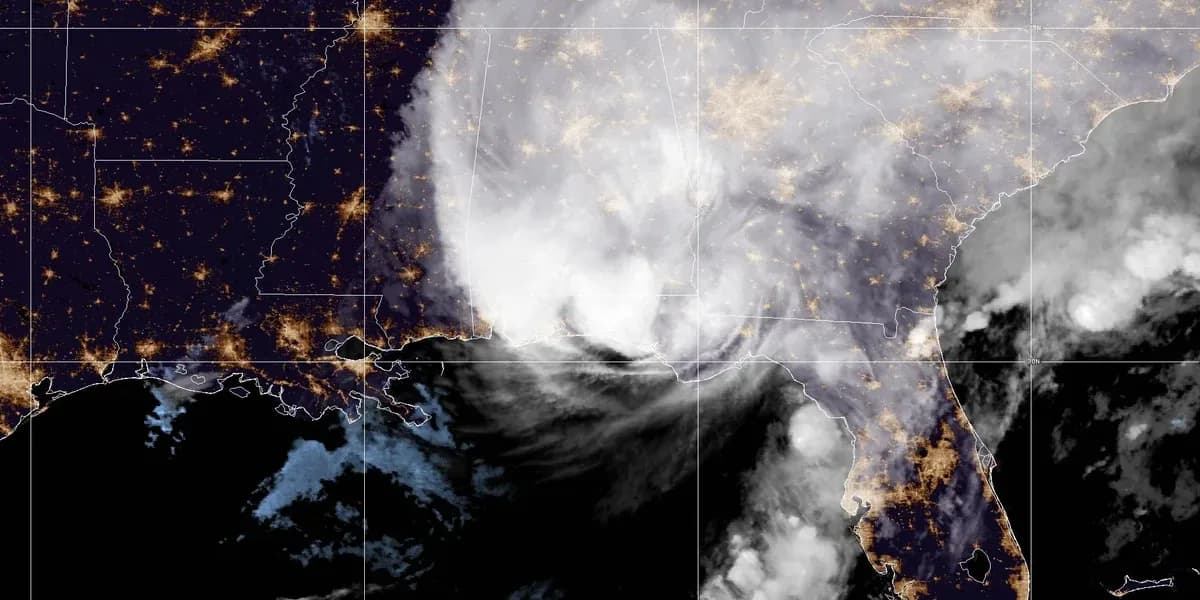
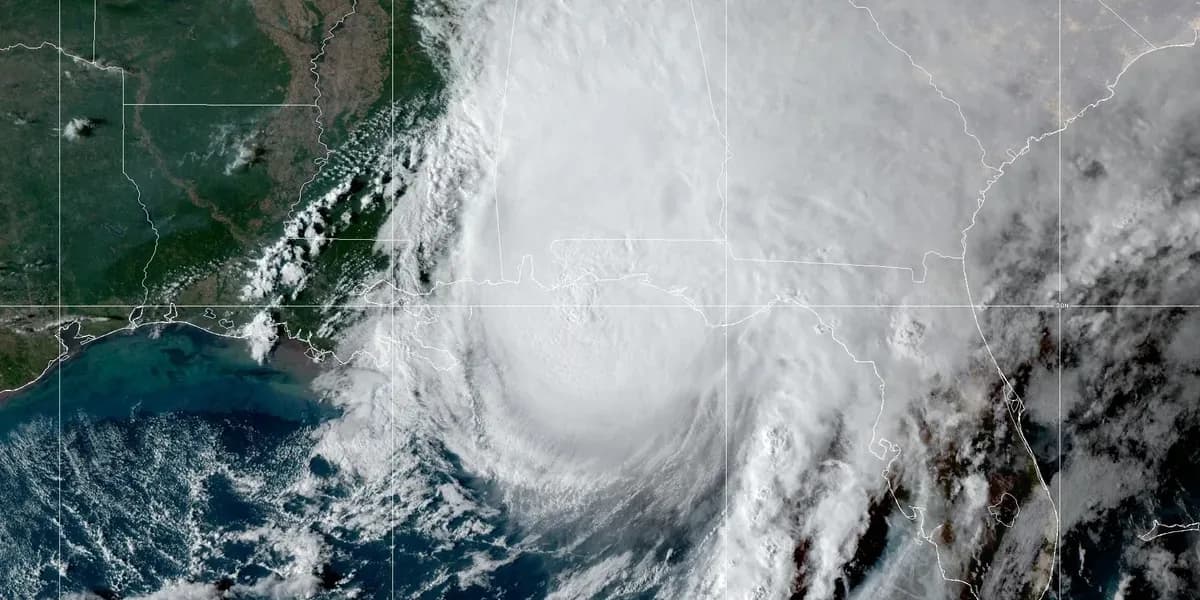
Hurricane Isaias Claim Guide
Hurricane Isaias Claims: How American Financial Claims Is Helping Panhandle Homeowners Move Toward Payment
The first inspection is not the whole claim. Here is the work that happens between a carrier's estimate, a complete damage file and a homeowner's next payment.

By American Financial Claims
Hurricane Updates & Insurance Claim Resources · Florida firm license G288962
Published 7 min read
In this article (7 sections)
After Hurricane Isaias, homeowners are facing a different kind of cleanup: insurance paperwork. An estimate arrives. A coverage letter follows. A check may be on its way, yet the cost of making the property whole still needs a careful review.
American Financial Claims is actively representing Panhandle homeowners, obtaining policy documents and reviewing claim correspondence. Our current work includes following up on carrier estimates and payment letters, helping homeowners understand what their insurer has decided, and organizing the documents needed for the next stage of the claim.
Our Isaias claim work includes homeowners in Pensacola, Gulf Breeze, Milton and Navarre. We also welcome homeowners in Pace, Destin, Fort Walton Beach, Panama City Beach and surrounding Panhandle communities who want an independent review of their damage and insurance paperwork.
What is happening in current Isaias claim files
A payment letter tells you what the insurer decided. A complete damage review helps you decide what to do next.
The work is not one single event. A file may be waiting for the complete policy while another has an initial estimate, a coverage decision or instructions for claiming recoverable depreciation.
Our current claim correspondence includes requests for complete policies and endorsements, follow-ups for estimates and payment letters, and review of a carrier packet containing a coverage determination, repair estimate and mediation information. We are also helping homeowners understand the paperwork that accompanies a payment, including recoverable-depreciation and supplemental-claim instructions.
These documents serve different purposes. An estimate can be preliminary; it does not necessarily establish the final coverage decision. A payment can be undisputed or partial; it is not automatically the last amount payable. A depreciation letter may explain what must happen before a withheld portion can be considered for release.
First check ≠ complete review
Our job is to connect the policy, the damage, the estimate and the correspondence—not to assume that every first payment is wrong or promise that every claim will increase.
The damage review: start with the whole property
A hurricane inspection should tell a coherent story: what was damaged, how it happened, what repairs are reasonably needed and which policy provisions apply. The following are inspection checkpoints—not a claim that every item exists in every Isaias home.
Beyond the obvious missing shingles
- Roof covering: wind-lifted or creased shingles, displaced tiles and damaged tile attachments or bonds. A small repair scope should be checked against documented conditions and whether the proposed repair can actually be performed.
- Below the surface: underlayment and decking conditions, attic moisture and wet insulation. A dry-looking ceiling does not establish that the entire assembly is dry.
- Water entry paths: damaged soffit or fascia, flashing, openings and window assemblies. The source of water matters; storm surge, flood and wind-driven rain are not interchangeable coverage categories.
- Interior damage: ceiling cavities, wall finishes, trim and adjoining materials. Newly visible staining or moisture should be dated, photographed and reported promptly, with evidence connecting it to the covered loss rather than assumptions.
- Outside the house: detached structures, fences and screened enclosures. Different coverage limits, exclusions, depreciation rules and deductibles may apply.
Do not climb a damaged roof or open an unsafe ceiling to gather evidence. Protect the property where safe, use qualified contractors for emergency work, save receipts and preserve photographs before material is removed. Continue cooperating with reasonable insurer requests.
Why a below-deductible estimate deserves a closer look
A below-deductible result can have several explanations. The covered damage may genuinely cost less than the deductible. Or the estimate may omit a damaged area, use an incomplete repair method or contain a measurement or pricing issue. Coverage exclusions and policy limitations can also affect the result.
That is why we start with the scope, not a promised payout. If the scope is incomplete, subtracting the deductible from that incomplete number will not tell the homeowner what a properly supported covered repair would cost.
- A deductible question: Is the right deductible applied, and has the carrier correctly accounted for the applicable hurricane-deductible provisions?
- A scope question: Does the estimate include every documented covered repair, with accurate quantities and reasonable repair methods?
- A coverage question: What does the policy cover or exclude, and what explanation does the carrier give for its decision?
These are separate questions. Our Isaias deductible guide explains the deductible; our underpaid-or-denied guide explains how scope and coverage disputes differ.
Code compliance and matching: important, but never automatic
A roof estimate needs more than a shingle count. Permit history, roof condition, applicable building requirements and the proposed repair method can matter. So can the policy's ordinance-or-law coverage and its limits.
Florida's frequently quoted 25% roof rule is not an automatic entitlement to a new roof. Under Florida Statute §553.844(5), a roof or roof section built, repaired or replaced in compliance with the 2007 Florida Building Code or a later edition has an important exception: even when 25% or more is being repaired, replaced or recovered, only that portion must meet the applicable current code. The actual roof history, applicable code and building official's requirements must be checked.
Matching — §626.9744
Under §626.9744, qualifying replacement-cost homeowners claims can require reasonable repairs or replacement in adjoining areas when replacement items do not match in quality, color or size. Policy terms and statutory factors matter. It is not a blanket promise of replacing every undamaged surface.
Our review asks for evidence: product availability, repairability, permit requirements and policy provisions—not slogans about a guaranteed full replacement.
How American Financial Claims handles the heavy lifting
- Read the policy and carrier packet. We compare the declarations, endorsements, deductible, coverage letter, estimate and payment worksheet. A declarations page alone is not the whole policy.
- Document the property. We arrange a thorough inspection or reinspection as appropriate, record measurements and photographs, and use moisture documentation where relevant. We separate observed damage from questions needing a contractor, engineer or other specialist.
- Build a supported repair scope. An itemized estimate should identify affected areas, repair operations, quantities and appropriate local material and labor costs. An Xactimate-style report is a tool—not proof by itself that an amount is right. Panhandle contractor evidence and the work actually required matter.
- Present the differences clearly. Missing items, disputed measurements, repair methods and supporting documents should be organized so the insurer can evaluate them. Where justified, we pursue additional covered benefits through a properly documented supplemental or reopened claim.
- Negotiate and explain the response. We handle claim communications within our role as public adjusters, keep the homeowner informed and explain remaining options if the disagreement continues.
A deadline worth getting right
Under §627.70132, notice of a new or reopened claim is generally due within 1 year of the date of loss; notice of a supplemental claim is generally due within 18 months. These are different categories. The clock does not restart when a check or estimate arrives. Policy duties still require prompt action.
Helping the community means making the next step understandable
For a homeowner, progress may begin with a simple question: “What does this letter mean?” It may mean obtaining a missing estimate, explaining a deductible or organizing the evidence needed to challenge a repair scope. Not every file needs the same next step.
Our focus is resolving claims through documentation and negotiation, without a lawsuit whenever possible. We settle most claims ourselves without a lawsuit, and a lawyer is for when legal advice or court is actually needed. A public adjuster does not provide legal advice.
If you have received a carrier packet, start with our companion guide: How to understand your adjuster's report—and your options after it arrives.
Get a free Isaias claim review
Bring the estimate, coverage letter, payment worksheet, policy and any damage photographs you have. We will help you understand what the paperwork says and whether further claim work may be appropriate.
American Financial Claims offers a free claim review. No recovery, no fee, under the terms of your public-adjusting agreement. Additional payment is not guaranteed.
Frequently asked questions
Does a first insurance check mean my Isaias claim is finished?
Not necessarily. Review the coverage letter, payment wording and any release. A partial or undisputed payment differs from a final settlement. Get advice before depositing a check marked as full satisfaction or signing a release.
Can a below-deductible estimate be reviewed?
Yes. The review should check the policy, deductible and documented repair scope. A review does not guarantee coverage or an increased payment.
Do I have to wait for repairs to be finished before contacting a public adjuster?
No. An early review can help organize the damage documentation and carrier correspondence. Continue protecting the property, promptly reporting additional damage and meeting your policy duties.
Are these Isaias settlement case studies?
No. This article explains current claim-handling work and practical next steps. It does not present named client recoveries or payout figures.
Educational information only, not legal advice. Scenarios in this article are general illustrations, not real cases or clients. Coverage, deadlines and outcomes depend on your policy, your state and your facts, and no result is guaranteed. Statute references are to the Florida Statutes as published by the Florida Legislature; other states’ rules differ. American Financial Claims is a public adjusting firm, not a law firm.