Hurricane Isaias Claim Guide
Your Rights Under Florida Law When Filing a Hurricane Isaias Insurance Claim
Florida law gives homeowners specific rights during a property claim: deadlines your insurer has to meet, documents it has to share, and ways to resolve a dispute. Here is a plain-language guide to the rights that matter most after Isaias.

By American Financial Claims
Hurricane Updates & Insurance Claim Resources · Florida firm license G288962
Published 9 min read

In this article (8 sections)
When your home is damaged, it can feel like the insurance company holds all the cards. It writes the estimate, sets the schedule and decides what to pay. But Florida law puts real rules on that process, and knowing them can change how your Isaias claim goes.
This guide walks through the rights Florida homeowners have during a property claim, with links to the statutes themselves. It is general information, not legal advice. Most of these rules apply to personal residential policies, like homeowners and condo unit policies, and there are exceptions when conditions are beyond an insurer’s control.
The Homeowner Claims Bill of Rights
Under Fla. Stat. 627.7142, an insurer that issues a personal residential property policy in Florida must give you a Homeowner Claims Bill of Rights within 14 days after it receives your first communication about a claim. If you reported an Isaias claim and have not seen it, check your email, your insurer’s app and your mail, or ask for it.
The document summarizes existing Florida law in simple terms. It says you have the right to:
- An acknowledgment of your claim within 7 days after you report it
- On written request, within 30 days after you submit a complete proof-of-loss statement, confirmation that your claim is covered in full, partly covered or denied, or a written statement that it is still being investigated
- A copy of any detailed estimate of the loss within 7 days after the insurer’s adjuster generates it
- Within 60 days, full settlement, payment of the undisputed portion, or a denial, subject to any dual interest in the policy, such as a mortgage company
- Interest, as provided by law, if the insurer does not pay or deny within 60 days
- Free mediation of a disputed claim through the Florida Department of Financial Services, under most circumstances
- Help from the Department of Financial Services consumer helpline
The statute is clear about its limits: the Bill of Rights is specific to the claims process, does not list all of your rights, does not create a right to sue on its own, and does not stop an insurer from using a right to repair your property if your policy includes one. It is still one of the most useful documents in your claim file.
Deadlines your insurance company has to meet
The detailed rules behind those rights are in Fla. Stat. 627.70131. For residential claims, they generally include:
- 7 days to acknowledge. The insurer must review and acknowledge your claim communication within 7 calendar days, unless it pays within that time.
- 7 days to start investigating. Unless the policy or law provides otherwise, the insurer must begin a reasonably necessary investigation within 7 days after receiving proof-of-loss statements.
- 30 days to inspect. If the investigation includes a physical inspection, it must happen within 30 days after the insurer receives the proof-of-loss statements.
- 60 days to pay or deny. Within 60 days after receiving notice of an initial, reopened or supplemental claim, the insurer must pay or deny the claim or a portion of it, with a reasonable written explanation.
These deadlines have exceptions. After a declared emergency, state regulators can give insurers extra time, though the law caps any extension of the payment decision at 30 additional days. The clock can also pause during mediation, or if you do not provide requested claim information within 10 days. That is a good reason to answer insurer requests quickly and keep copies of what you send.
Keep a claim diary
Write down the date you reported the claim, every call and email, every inspection and every document you sent. If a deadline is missed, those dates are how you show it.
Your right to know who is adjusting your claim, and to see the estimate
Under the same statute, the licensed adjuster the insurer assigns to inspect your property must give you a printed or electronic document with his or her name and Florida adjuster license number, and later communications about the claim must include that information too.
You also have the right to a copy of any detailed estimate the insurer’s adjuster writes, within 7 days after it is generated. If the insurer pays less than its own detailed estimate, it must explain the difference to you in writing. Ask for the full itemized estimate, not just the payment letter. That is the document that lets you compare, line by line, what was included and what was left out. Our guide on why Isaias claims get underpaid or denied shows what to look for.
Insurers can also inspect using photos, video or drones. The law allows that, and it allows you to help by sending clear photos and video of the damage. Just make sure everything you send is accurate and complete.
Your right to free state mediation
If you and your insurer disagree, the Florida Department of Financial Services runs a property insurance mediation program under Fla. Stat. 627.7015. Here is how it generally works for residential claims:
- Your insurer must tell you about your right to mediation when you file a claim, as well as at policy issuance and renewal
- A claim generally becomes eligible after the insurer has paid or denied it, or part of it, under the 60-day rule
- The insurer pays the cost of the mediation conference, unless you fail to show up
- Mediation is nonbinding; if you reach a written settlement, you generally have 3 business days to rescind it, unless you have already cashed or deposited the settlement check
- Mediation must be requested before appraisal or a lawsuit begins, and the law permits you to have legal counsel participate if you ask
- It covers personal and commercial residential policies, but not other commercial coverages
Mediation can be a good middle step: lower cost and less formal than litigation, with a neutral mediator helping both sides talk through the numbers. Learn more on our mediation page.
Appraisal basics
Appraisal is different from mediation. It is not a state program; it is a clause in many property policies. When the disagreement is about how much the loss is, not whether it is covered, either side may be able to demand appraisal under the policy’s terms.
Typically, each side picks its own appraiser, the two appraisers pick a neutral umpire, and an agreement by any two of the three sets the amount of loss. Each side usually pays its own appraiser and shares the umpire’s cost, though your policy controls the details. Appraisal generally does not decide coverage questions.
One Florida-specific note: under 627.7015, if your insurer failed to tell you about your mediation rights, or if the insurer requested mediation and either side rejected the result, you are not required to go to appraisal before suing. Read your policy’s appraisal clause carefully before you invoke it, and see our appraisal page.
Your right to hire a public adjuster
You have the right to bring in your own licensed public adjuster at any point in the claim. Florida law also sets ground rules for how the insurer deals with your representative.
- Under Fla. Stat. 626.854, for residential and condo claims, the insurer may not exclude your public adjuster from its in-person meetings with you, and it must meet or communicate with the public adjuster to try to agree on the scope of the covered loss
- The insurer’s adjusters and representatives must generally give at least 48 hours’ notice before scheduling a meeting or an on-site inspection with you or your public adjuster, unless you waive it
- In turn, your public adjuster must not obstruct the insurer’s reasonable access to you or the property
Our companion article, Florida statutes that protect you and how a public adjuster can help, covers the fee cap, cancellation rights and other protections that apply when you hire one.
Your own deadlines for an Isaias claim
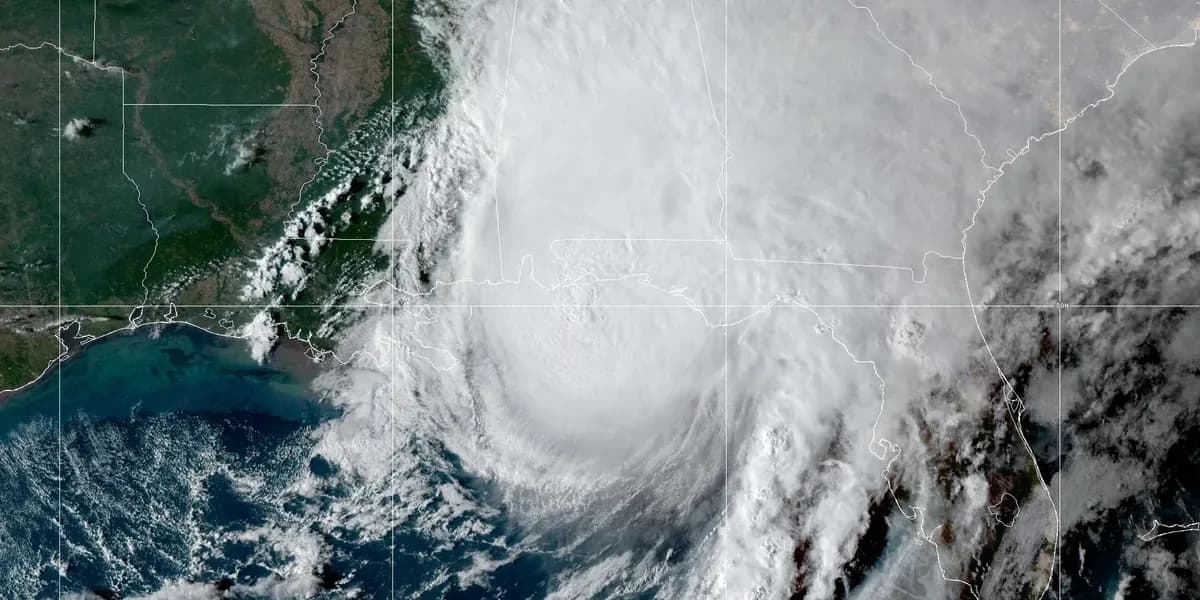
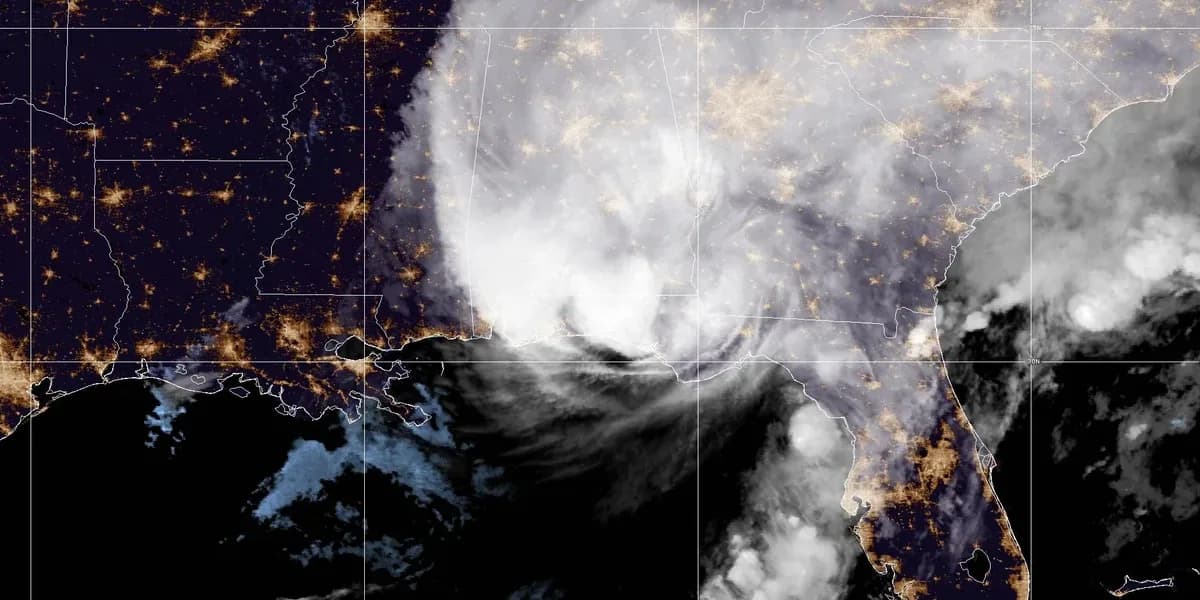
Rights come with deadlines on your side, too. Under Fla. Stat. 627.70132, notice of a new or reopened property claim must be given to the insurer within 1 year after the date of loss, and notice of a supplemental claim within 18 months. For hurricanes, the date of loss is the date the hurricane made landfall. The National Hurricane Center places Isaias’s landfall near Destin on October 9, 2026.
- New or reopened claim: by our reading, within 1 year of October 9, 2026
- Supplemental claim: within 18 months of October 9, 2026
- Condo loss assessment claims: the later of 1 year after the loss or 90 days after the association votes the assessment, and no later than 3 years after the loss
- Flood claims: separate, often shorter deadlines in your flood policy
These are outer limits. Your policy may also require prompt notice, and damage is easier to prove early. Our step-by-step filing guide walks through what to do first.
Where to get help
For free help with an insurance question or complaint, the Florida Department of Financial Services, Division of Consumer Services, runs a consumer helpline at 1-877-693-5236 (1-877-MY-FL-CFO).
Most property claims settle without a lawsuit. A lawyer is the right call when you need legal advice or the dispute is headed to court. A public adjuster can document, estimate and negotiate your claim, but cannot give legal advice.
American Financial Claims offers a free claim review. Call (239) 444-8101, or call (727) 342-1077 to schedule an inspection. More on Isaias: storm updates, our first Isaias guide, the hurricane deductible explained, and local pages for Pensacola, Destin and Fort Walton Beach and Panama City.
Frequently asked questions
What is the Florida Homeowner Claims Bill of Rights?
It is a document Florida insurers that issue personal residential property policies must give you within 14 days after you first communicate about a claim, under Fla. Stat. 627.7142. It summarizes key rights, such as a 7-day acknowledgment, a copy of the insurer’s detailed estimate within 7 days, a 60-day payment or denial, and free state mediation in most cases.
How long does my insurer have to pay or deny my Isaias claim?
Under Fla. Stat. 627.70131, a residential insurer generally must pay or deny a claim, or a portion of it, within 60 days after receiving notice, unless factors beyond its control apply. After a declared emergency, regulators can extend that by up to 30 days, and the clock can pause during mediation or while the insurer waits for information it requested.
Is state mediation really free?
For eligible residential claims under Fla. Stat. 627.7015, the insurer pays the cost of the mediation conference. If you fail to attend, you may have to pay to reschedule. Mediation is nonbinding, and you generally have 3 business days to rescind a written settlement, unless you have already cashed or deposited the settlement check.
Can my insurer refuse to deal with my public adjuster?
For residential and condo claims, Fla. Stat. 626.854 says the insurer may not exclude your public adjuster from its in-person meetings with you and must communicate with the public adjuster to try to agree on the scope of the loss. The insurer still has the right to inspect the property and interview you.
Educational information only, not legal advice. Scenarios in this article are general illustrations, not real cases or clients. Coverage, deadlines and outcomes depend on your policy, your state and your facts, and no result is guaranteed. Statute references are to the Florida Statutes as published by the Florida Legislature; other states’ rules differ. American Financial Claims is a public adjusting firm, not a law firm.