Hurricane Isaias Claim Guide
The Florida Hurricane Deductible, Explained for Hurricane Isaias Claims
For many Panhandle homeowners, the hurricane deductible is the biggest number on the claim that nobody talks about. Here is how it works, how to find yours, and why it matters even if your damage seems small.

By American Financial Claims
Hurricane Updates & Insurance Claim Resources · Florida firm license G288962
Published 8 min read
In this article (8 sections)
After Hurricane Isaias, a lot of Florida homeowners are opening their policies for the first time in years and finding a line that says something like “Hurricane deductible: 2%.” Two percent sounds small. On a typical Panhandle home, it often is not.
This guide explains in plain language how Florida hurricane deductibles work, walks through an example, and covers the details that catch people off guard, like the calendar-year rule and the separate flood deductible. It is general information, not legal advice. Your declarations page and policy wording control.
What a hurricane deductible is
A deductible is the part of a covered loss you pay yourself. Most Florida homeowners policies have two: an “all other perils” deductible, often a flat dollar amount, for things like a burst pipe or a kitchen fire, and a separate hurricane deductible for damage caused by a hurricane.
Under Fla. Stat. 627.701, before issuing a personal residential policy, insurers generally must offer hurricane deductible options of $500, 2%, 5% and 10% of the policy’s dwelling limits, with some exceptions for higher-value homes. The percentage is of your dwelling coverage limit (often called Coverage A), not of the damage. That is the part that surprises people.
The deductible is not a bill
You do not write a check to the insurance company. The deductible is subtracted from what the insurer pays on a covered claim. If the covered damage is less than the deductible, the insurer usually pays nothing on the dwelling claim.
How to find your hurricane deductible
Look at your declarations page, the summary page at the front of the policy. For personal residential policies with a separate hurricane deductible, Florida law requires the insurer to compute and prominently display the actual dollar amount of that deductible on the declarations page or renewal notice.
On your declarations page, find
- Your Coverage A (dwelling) limit
- Your hurricane deductible, as a percentage and as a dollar amount
- Your all other perils deductible
- Any separate roof deductible or windstorm exclusion
- Whether wind is covered by this policy or by a separate wind policy
If you cannot find it, ask your agent or insurer for a certified copy of the full policy. You can also try our hurricane deductible calculator.
A worked example: 2% of $400,000
Here is an illustration using round numbers. It is not a prediction of what any insurer will pay on any claim.
This is why an accurate, complete estimate matters so much. Every item missing from the scope comes out of the part above your deductible. With an $8,000 deductible, an estimate of $9,000 would pay about $1,000, while a complete estimate of $30,000 would pay about $22,000, before other adjustments. The deductible stays the same; the scope decides what is left.
When the hurricane deductible applies to Isaias damage
Florida law defines the hurricane period for residential policies in Fla. Stat. 627.4025. It begins when the National Hurricane Center issues a hurricane warning for any part of Florida, and it ends 72 hours after the last hurricane watch or warning for any part of Florida ends.
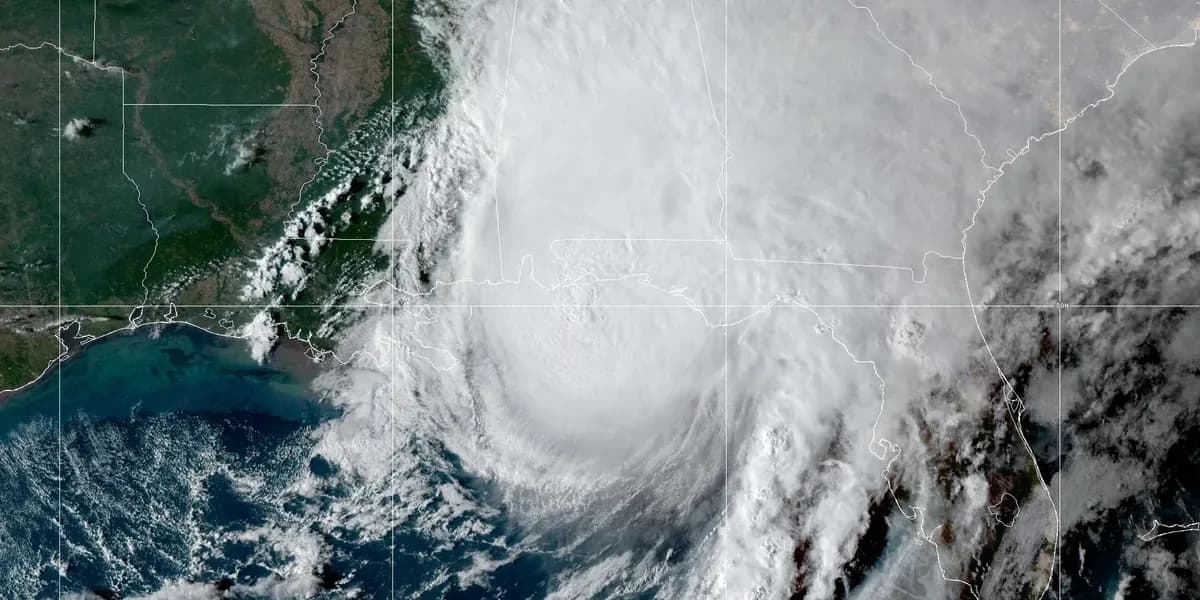
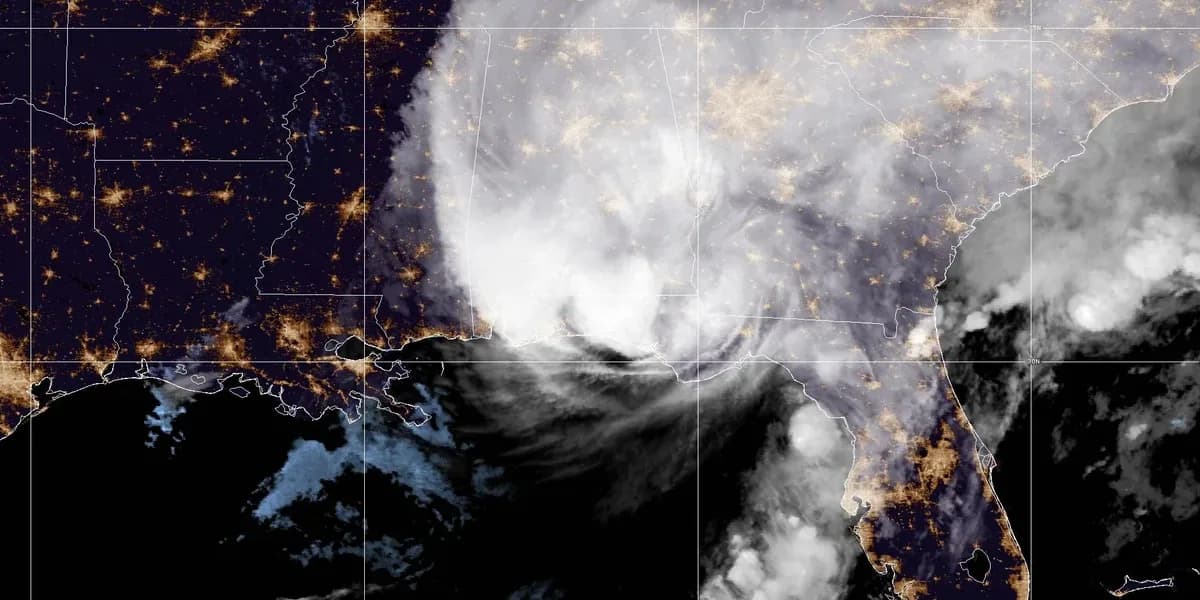
For Isaias, NHC issued a Hurricane Warning for part of the Florida Panhandle in Advisory 6 on the night of October 7, 2026, and in Intermediate Advisory 14A early on October 10 changed the last Florida Hurricane Warning to a Tropical Storm Warning. By our reading, the hurricane period for Isaias ran from that warning until about 72 hours after the early-morning October 10 change. Your insurer will apply its own policy wording, so check how it defines the hurricane period.
- Wind damage to the roof, siding, windows, fences and screen enclosures during that window generally falls under the hurricane deductible.
- Rain that came in through an opening the wind created is included in Florida’s definition of hurricane coverage.
- Tornadoes caused by the hurricane are treated as part of the hurricane windstorm under the statute’s definition.
- Flood and storm surge are generally excluded from homeowners policies and handled under a separate flood policy with its own deductible.
The calendar-year rule, and why you should report small losses
Under Fla. Stat. 627.701, the hurricane deductible on personal residential policies applies on an annual basis to all covered hurricane losses in a calendar year with the same insurer or insurer group. If you already had a hurricane loss earlier in the calendar year, the insurer may apply the greater of what is left of your hurricane deductible or your all other perils deductible to the next hurricane.
That rule is one reason to report Isaias damage even if you think it is below your deductible. Insurers can require you to report hurricane losses below the deductible, or keep records of them, to apply them toward later hurricane claims in the same year. Hidden damage also has a way of turning a small claim into a big one once the ceiling is opened up.
If a hurricane deductible applies separately to more than one structure on a single policy, these rules apply to each structure’s deductible. Read your policy’s wording carefully.
Condos, flood policies and other deductibles
Condo owners
If you own a condo in Destin, Pensacola Beach or Panama City Beach, there may be two policies and two deductibles in play: your own unit-owner (HO-6) policy, and the association’s master policy. When the association’s deductible or uncovered damage is passed on to owners as a special assessment, loss assessment coverage on your unit policy may help. Florida law has a specific notice timeline for loss assessment claims, generally the later of 1 year after the loss or 90 days after the association votes the assessment, and no later than 3 years after the loss.
Flood insurance
A flood policy has its own deductible, separate from your homeowners hurricane deductible. If you have both wind and flood damage, you may face both deductibles, one on each claim. See our flood claims page.
Roof deductibles
Some Florida policies now include a separate roof deductible. Under Florida law, it generally does not apply to a roof loss from a hurricane, but check your declarations page so you know what you have.
Deductible watch-outs after Isaias
- Be wary of anyone offering to “cover” your deductible. Florida law prohibits contractors from offering to waive a deductible in exchange for a roof inspection or roof claim (Fla. Stat. 489.147), and has similar rules for public adjusters.
- A public adjuster’s fee cannot be based on your deductible. Under Fla. Stat. 626.854, claim payments do not include the deductible, and fees cannot be taken from it.
- Check the math on the payment letter. Make sure the right deductible was used, that it was applied only once to the claim as your policy requires, and that the dollar amount matches your declarations page.
- Do not let the deductible stop you from filing. Only a complete estimate shows whether your damage is above it.
Next steps
Isaias came ashore near Destin as a 105 mph Category 2 hurricane, and a lot of its damage is the kind that hides in attics and walls. Before you decide your claim is “under the deductible,” get the full picture. Our step-by-step guide to filing an Isaias claim covers documentation and deadlines, and why Isaias claims get underpaid or denied covers what to do if the payment looks wrong.
American Financial Claims offers a free claim review. Call (239) 444-8101, or call (727) 342-1077 to schedule an inspection. Local guides: Pensacola, Destin and Fort Walton Beach, Panama City. Storm timeline: Hurricane Isaias.
Frequently asked questions
How is a 2% hurricane deductible calculated in Florida?
It is 2% of your dwelling coverage limit (Coverage A), not 2% of the damage. On a home insured for $400,000, a 2% hurricane deductible is $8,000, which is subtracted from the insurer’s payment on a covered hurricane claim.
Does the hurricane deductible apply to every Isaias claim?
It generally applies to covered losses caused by the hurricane during the hurricane period Florida law defines, which runs from the first Florida hurricane warning until 72 hours after the last Florida hurricane watch or warning ends. Flood damage is usually handled under a separate flood policy with its own deductible.
Should I file a claim if my damage seems smaller than my deductible?
It is often worth reporting. Hidden damage can make the real total much larger than it first looks, and Florida applies the hurricane deductible on a calendar-year basis, so reported losses can count toward the deductible on a later hurricane claim the same year with the same insurer.
Can a contractor pay my hurricane deductible for me?
Be careful. Florida law prohibits contractors from offering to waive a deductible in exchange for a roof inspection or roof claim, and knowingly paying, waiving or rebating a deductible with intent to defraud is insurance fraud.
Educational information only, not legal advice. Scenarios in this article are general illustrations, not real cases or clients. Coverage, deadlines and outcomes depend on your policy, your state and your facts, and no result is guaranteed. Statute references are to the Florida Statutes as published by the Florida Legislature; other states’ rules differ. American Financial Claims is a public adjusting firm, not a law firm.